

There’s finally some positive news for those who’ve felt priced out or hesitant to enter the market.
Homeownership is starting to feel more within reach.
Monthly mortgage payments are easing, and the financial pressure buyers have faced over the past few years is gradually loosening. This doesn’t mean everyone can suddenly afford a home, but given how challenging the market has been, even modest improvements are significant.
Affordability Is Trending Upward
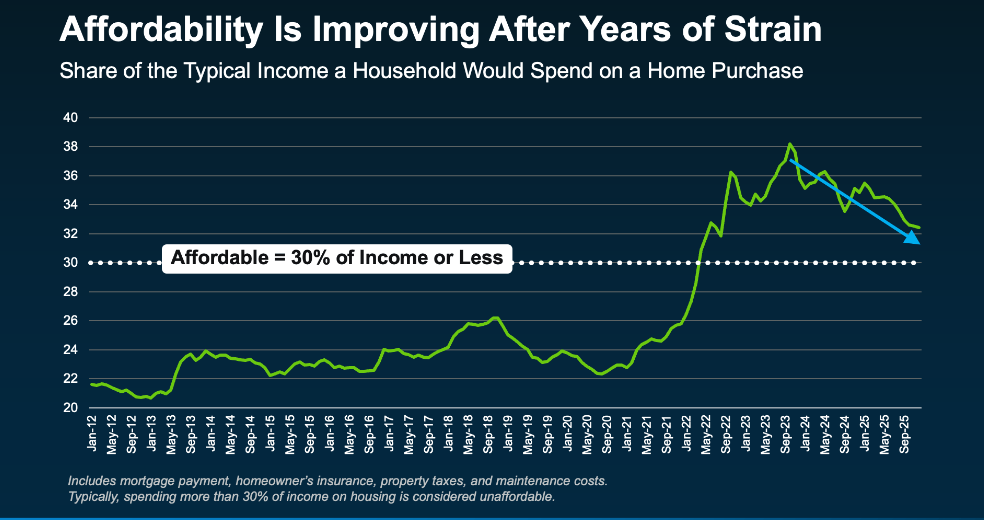
A clear way to track this shift is by looking at how much of a household’s income goes toward buying a home.
According to Zillow, a home is generally considered affordable when a household spends 30% or less of its monthly income on housing costs—including mortgage payments, taxes, insurance, and basic upkeep.
For several years, many households were far above that mark, making homeownership out of reach. But now, the balance is slowly returning. Zillow data shows that today, a typical household spends a smaller share of its income on housing than it did just a few years ago.
While we haven’t yet reached the 30% threshold, the trend is moving in the right direction.
What’s Driving This Improvement?
Several factors are helping make homes more accessible:
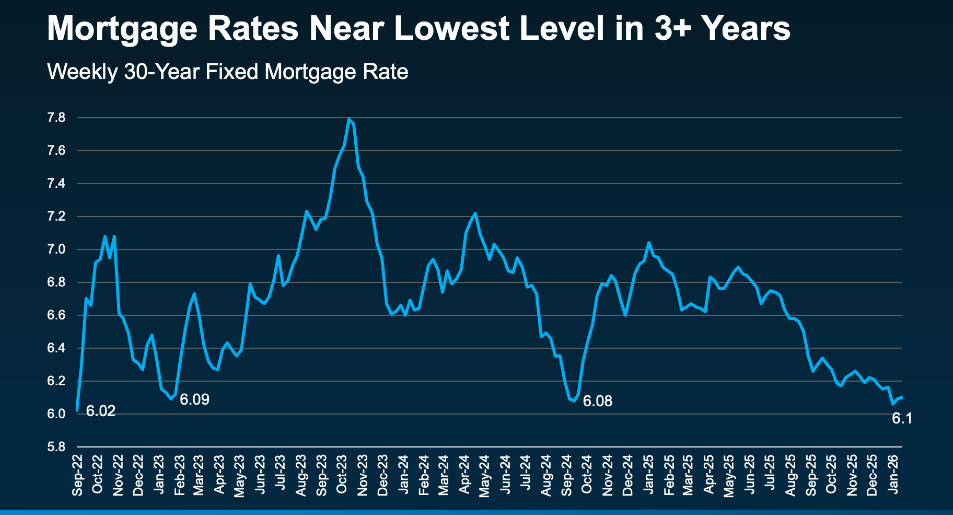
- Lower mortgage rates. Rates have dropped to their lowest point in over three years, reducing monthly payments.
2.Slower home price growth. Nationwide prices aren’t falling, but they’re rising more gradually. This softens the financial shock of buying a home and makes costs easier to plan for.
3. Rising wages outpacing home prices. Mark Fleming, Chief Economist at First American, notes:
“When income growth exceeds house price growth, house-buying power improves—even if mortgage rates don’t drop significantly.”
These trends don’t make homes “cheap,” but they explain why buying is gradually becoming more manageable. Fleming puts it well:
“Affordability remains challenging, but for the first time in several years, the underlying forces are aligned toward gradual improvement. Even if mortgage rates decline slowly, income growth outpacing house price appreciation boosts buying power. Affordability won’t snap back overnight, but like a ship catching a steady tailwind, it’s now moving in the right direction.”
Economists expect these factors to continue improving affordability throughout 2026.
Where Affordability Is Improving First
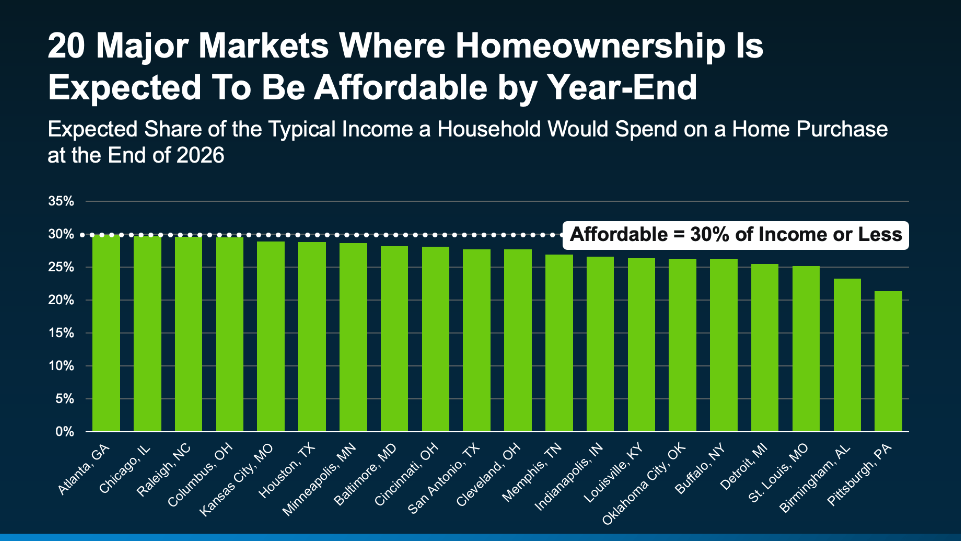
How noticeable will these changes be? In some regions, significantly. Zillow predicts that several markets could drop below the 30% income threshold by the end of the year.
However, you don’t have to wait for those markets—or the year’s end—to see opportunities. Many areas are already seeing meaningful gains in affordability. Consulting a local agent can help you identify where buying is now more achievable.
Bottom Line
For the first time in years, housing affordability is easing. This is an important shift.
Because the pace of improvement varies by region, understanding local trends is key. If you want to explore how these changes are playing out in your area, it’s worth having a conversation with a knowledgeable agent.