If you’ve been following housing market trends, you’ve likely come across a blend of optimism, worry, and confusion. Will home prices crash? Will mortgage rates suddenly fall? Is this the right time to invest in property?
The reality is that while the real estate market keeps changing, several widely discussed predictions are unlikely to play out—at least not in the near future.
Sometimes, understanding what won’t happen is just as valuable as knowing what will. It helps you avoid poor decisions, think more clearly, and navigate the market with confidence.
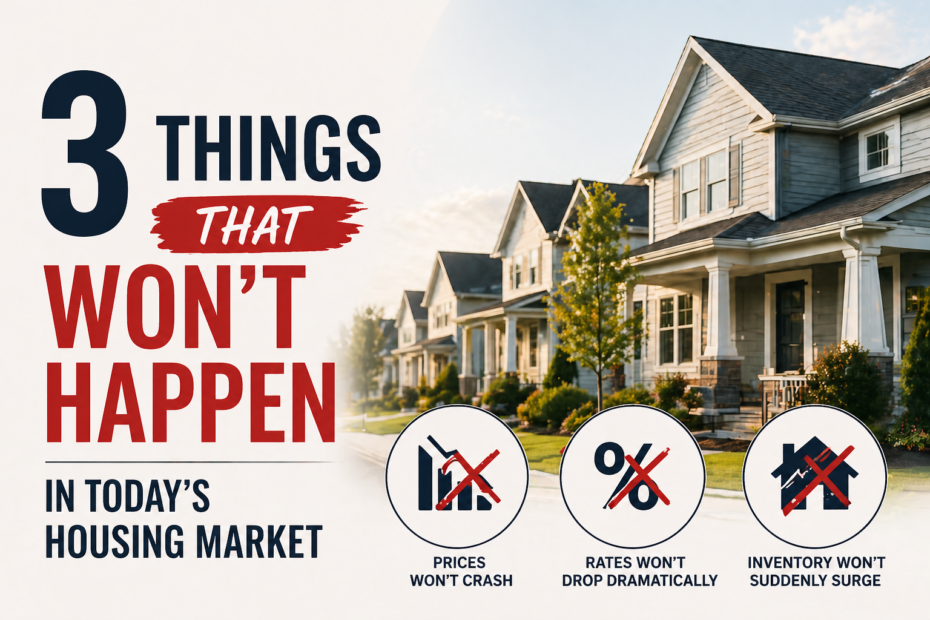
Let’s look at three key things that are not expected to happen in today’s housing market—and the reasons behind them.
1. A 2008-Style Housing Market Crash
Why People Expect It
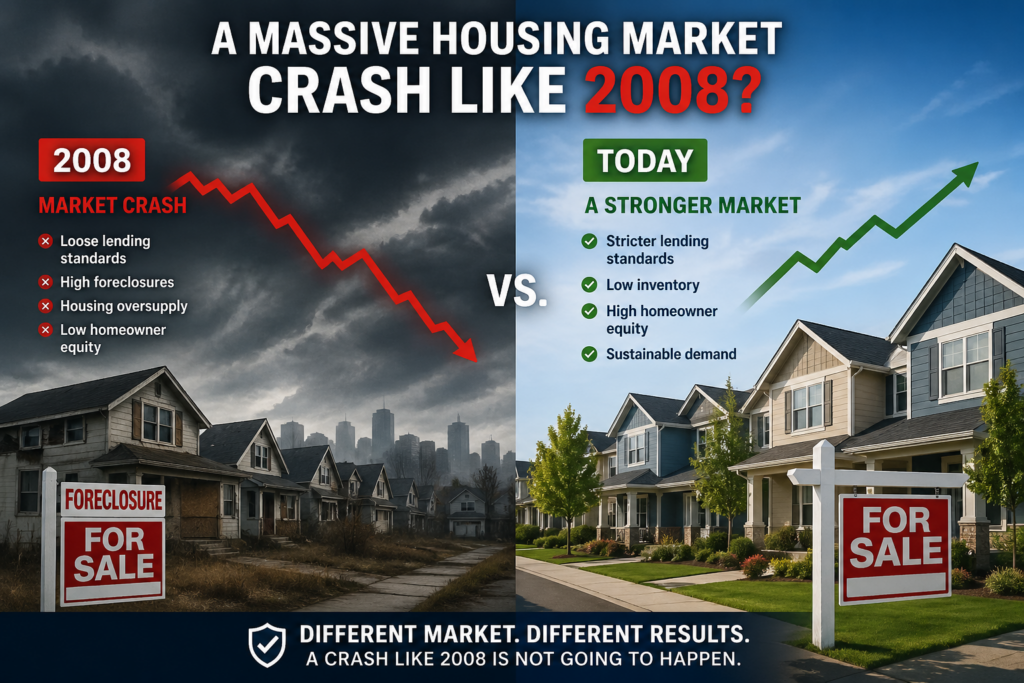
The 2008 financial crisis left a lasting impact. Home prices collapsed, foreclosures spiked, and the housing market fell apart quickly. So, when people see higher interest rates or slower sales today, they often fear a repeat scenario.
Why It’s Unlikely
Today’s housing market is structurally stronger:
- Stricter lending rules: Banks now enforce tighter qualification standards, reducing risky lending.
- Limited housing supply: There aren’t enough homes to meet demand, which helps support prices.
- Strong homeowner equity: Most homeowners have built up equity, reducing forced selling.
What This Means
While small price corrections or regional slowdowns may happen, a severe crash like 2008 is highly improbable. Waiting for a major price drop could mean missing good opportunities. A long-term perspective is far more reliable than trying to time the market.
2. A Sudden Drop in Mortgage Interest Rates
The Common Hope
Many buyers are postponing purchases, hoping mortgage rates will quickly return to the ultra-low levels seen during the pandemic.
The Reality
Mortgage rates are shaped by broader economic forces such as inflation, central bank policies, and global financial conditions. These factors don’t change overnight.
- Rate changes are usually gradual, not sudden.
- Central banks often maintain higher rates to control inflation.
- Sharp rate drops typically indicate economic instability, not improvement.
What This Means
Waiting for dramatically lower rates may keep you out of the market for too long. A more practical strategy is to:
- Buy when it makes financial sense for you
- Refinance later if rates drop
- Focus on overall affordability rather than chasing the lowest rate
3. A Complete Drop in Housing Demand
The Concern
Some believe that rising prices and higher borrowing costs will eventually eliminate buyer demand altogether.
Why Demand Will Continue
Despite short-term slowdowns, demand remains supported by strong long-term drivers:
- Population growth and urban expansion
- First-time homebuyers entering the market
- Changing lifestyle needs (like remote work and more space)
- Real estate remaining a preferred long-term investment
Even in weaker markets, people still need housing—whether to live in, rent, or invest.
What This Means
Demand may rise and fall, but it won’t disappear. This means:
- Well-priced homes will continue to sell
- Rental demand will remain steady
- Buyers and investors should act strategically, not emotionally
What’s More Likely to Happen Instead?
Rather than dramatic shifts, the market is more likely to see:
- Steady or moderate price growth
- Regional differences in performance
- Continued affordability challenges
- Smarter, more selective property investment decisions
In short, the housing market isn’t collapsing—it’s adjusting and evolving.
Final Thoughts: Focus on Reality, Not Noise
The housing market is often surrounded by hype, predictions, and fear-driven headlines. But the actual situation is far more balanced than it appears.
- A 2008-style crash? Unlikely.
- A sudden plunge in interest rates? Not expected.
- A collapse in demand? Highly improbable.
When you understand these realities, you’re in a stronger position to make confident, informed decisions—whether you’re buying your first home or building a real estate portfolio.